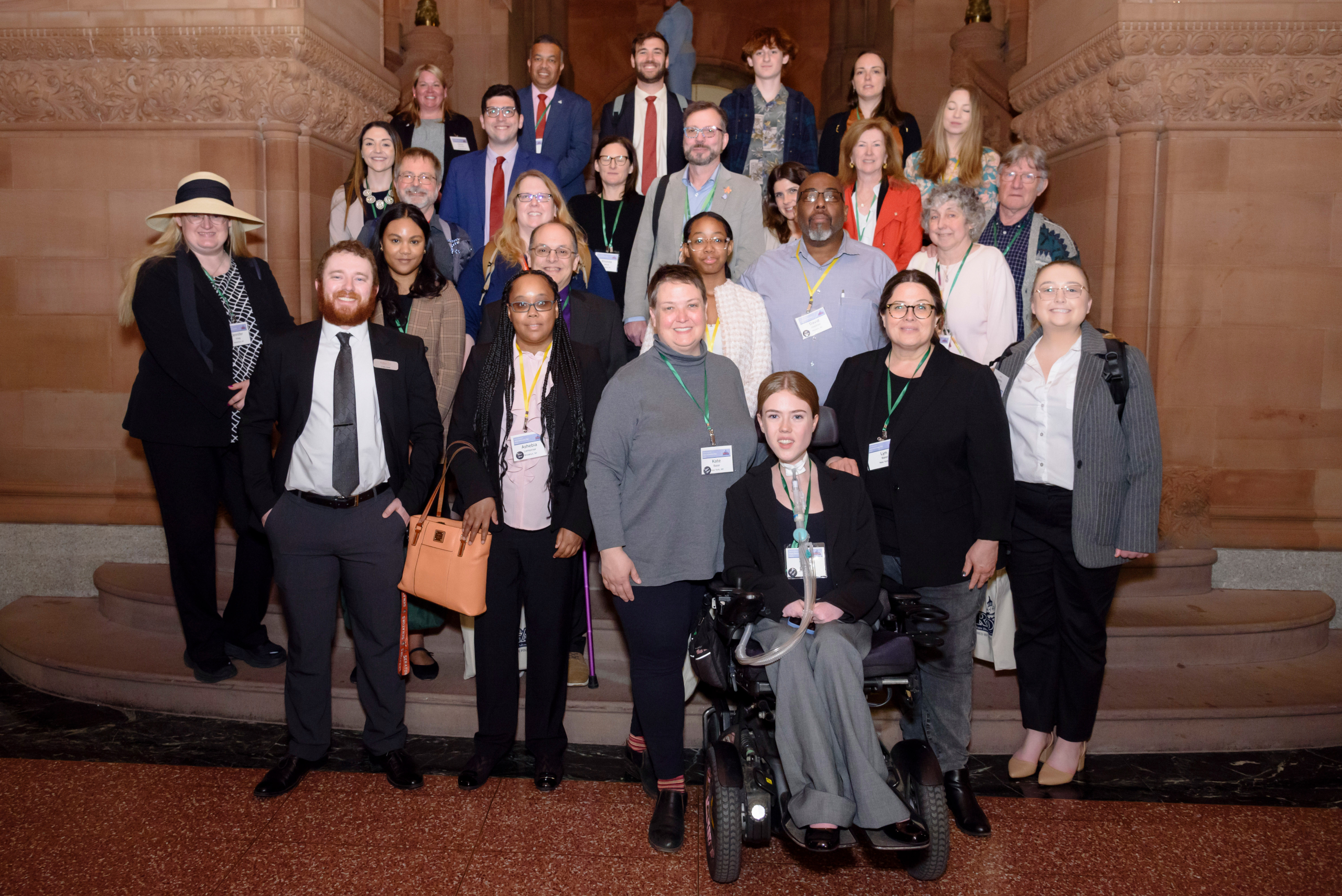
State’s can make positive, tangible changes for patients with rare diseases and their families through state-level legislation. State governments have a lot of power over public health insurance, diagnostics, and patient access through a more personalized approach to solving problems. As the laboratory for democracy, state-level issues may create momentum to change broader federal law.
We must act with urgency to ensure all rare disease patients and families receive timely and accurate diagnoses so they can access expert care and available therapies that can improve lives and limit preventable economic impacts. Below are a few policy areas that are important to the rare disease community.
Medicaid and H.R. 1 Implementation
H.R.1, the One Big Beautiful Bill Act (OBBBA), is a federal reconciliation bill passed in 2025 that made significant changes to Medicaid. OBBBA will shift costs to states and impose new program requirements, resulting in an estimated 10 million people losing coverage.3 The rare disease community relies on Medicaid for access to coverage for diagnosis, treatment, medical equipment, home healthcare, and caregiving services. States must work to ensure that patients with rare diseases remain enrolled in coverage and retain access to essential Home and Community-Based Services.
Patient and Expert Representation in Payer Decision Making
Rare disease patient and expert engagement with committees that determine coverage policy, such as Medicaid and Commercial Drug Utilization Review (DUR) Boards and Pharmacy and Therapeutics (P&T) Committees, is essential to ensuring timely and appropriate coverage policy. Therapies for rare diseases are developed for areas of high unmet need and have unique complexities that require the inclusion of specialized scientific expertise and lived experiences in coverage evaluations. Transparent, accessible, and timely processes must be in place to ensure all perspectives are included.
Newborn Screening and Program Sustainability
The Recommended Uniform Screening Panel (RUSP) is a list of disorders federally recommended for states to screen as part of their universal newborn screening programs. The RUSP contains 40 conditions that, without early detection and intervention, can cause disabilities or even death.
While the Advisory Committee on Heritable Disorders in Newborns and Children (ACHDNC) was terminated in 2025, the RUSP remains an effective way for states to ensure that all newborns have access to screening. RUSP alignment legislation, as passed in 13 states, creates an automatic, streamlined process for states to evaluate, at a minimum, all new RUSP conditions, leveraging established medical standards and decreasing burdens for state officials and patient advocates.
Newborn Screening Alignment By State
Genetic Data Non-Discrimination
With approximately 70% of rare diseases being genetic in origin,4 genetic testing that rapidly informs appropriate patient care and treatment is fundamental to rare disease patients’ health and well-being. However, concerns regarding privacy and discrimination have deterred many from seeking genetic testing. Legislation that prohibits life, long-term care, and disability insurers from accessing genetic test results and making coverage decisions based on such information provides much-needed protection against discrimination and financial repercussions for individuals with genetic risk factors.
Access to Genetic Testing Services
Navigating a rare disease diagnosis can require more than 6 years, on average, after symptoms begin.5 A recent study revealed that for some rare diseases, the economic impact of a delayed diagnosis can be over $500,000 per patient.6 Genetic testing can play a crucial role in shortening a patient’s diagnostic journey, decreasing financial burdens on families and the health care system and improving health outcomes. States can play an important role in ending the diagnostic odyssey for patients with rare diseases by supporting innovative pediatric genomic screening initiatives, ensuring the privacy of genetic data, and providing first-line Medicaid coverage for a wide range of DNA sequencing services as recommended by a physician.
Copay Adjustment Programs
In recent years, health plans have started using copay adjustment policies. They can also be called copay accumulators or copay maximizers. These policies allow insurance companies to take the money from charity programs that help patients pay copays without this money going toward the deductible or cost-sharing limits. While copay adjustment programs can reduce costs for health plans, they leave patients with unexpected and unaffordable costs once their copay assistance is exhausted. These harmful policies eat into the already tight budget patients have, restricting access to rare disease patients’ high-cost, lifesaving medications. Many states have banned copay adjustment practices for state-regulated health plans.
Learn more about copay adjustment programs.
Prior Authorization Reform
Health insurers and pharmacy benefit managers increasingly require healthcare professionals to obtain approval, called prior authorization, before covering pharmaceuticals and medical services. While prior authorization requirements can help health plans keep costs low, they disrupt care with harmful delays, divert resources from patients, and complicate medical decision-making. State efforts can increase the transparency, timeliness, and use of appropriate experts in the prior authorization process.
Determining State Policy Priorities
The RARE Foundation’s policy priorities are informed by Community Congress, a forum for collaboration among stakeholders representing over 260 rare disease patient advocacy organizations, as well as over 120 other healthcare and biotechnology organizations. You can improve the lives of millions of patients and families in your state by supporting policies that facilitate early, accurate and affordable access to diagnostic services and access to the best care and treatments available. Learn more about our federal or state policy priorities.
Rare disease advocates across the country are taking action in their respective states in various ways. RARE Advocates is a program of the RARE Foundation designed to support the advocacy of all rare disease patients and organizations. To learn more about rare disease policies, how to support these policies, and more, visit our State Advocacy Hub or email policy@rareadvocates.org.

Latest Updates
Footnotes:
- RARE Foundation. The National Economic Burden of Rare Disease Study
- Fermaglich, Lewis J, and Kathleen L Miller. A Comprehensive Study of the Rare Diseases and Conditions Targeted By Orphan Drug Designations and Approvals Over the Forty Years of the Orphan Drug Act.” Orphanet journal of rare diseases vol. 18,1 163.
- Horstman, C., & Coleman, A. (2025). States are planning their responses to H.R. 1 Cuts in Medicaid funding — Will enrollees lose benefits? The Commonwealth Fund Website. doi.org/10.26099/4bk8-jj06
- National Human Genome Research Institute, Accessed April 2024. Rare Genetic Diseases, genome.gov/dna-day/15-ways/rare genetic-disease.
- RARE Foundation. The National Economic Burden of Rare Disease Study
- RARE Foundation, The Cost of Delayed Diagnosis in Rare Disease: A Health Economic Study