
What are FDA user fees?
User fee programs allow the FDA to collect fees from drug and device manufacturers at the initial application and, in some cases, annually, to support the agency’s ability to conduct timely reviews. The fees and review-timeline commitments from the agency are negotiated among the FDA, Congress, and the regulated industries.
FDA administers several user fee programs, initially starting with the Prescription Drug User Fee Act and later expanding to include separate programs for medical devices, generic drugs, biosimilars, tobacco products, and animal health products.
Other FDA user fee programs that may be relevant to rare disease medical products include:
- Medical Device User Fee Act (MDUFA)
- Generic Drug User Fee Act (GDUFA)
- Biosimilar User Fee Act (BsUFA)
What is PDUFA?
The Prescription Drug User Fee Act (PDUFA) was initially passed by Congress in 1992. It included “Accelerated Approval” regulations enabling approval based on the use of surrogate biomarkers.
Before PDUFA, more than 70 percent of new medications were first approved outside of the U.S., and, on average, it took 27 months to review a new drug application. During the HIV/AIDS crisis, advocates activated and demanded policy solutions to shorten product review times. As a result of strong patient community advocacy, Congress, the FDA, and the pharmaceutical industry worked together to create PDUFA.
Shortening Review Times for New Drugs
To shorten review times and improve the process used to review new drugs, the Food and Drug Administration (FDA) needed a large infusion of new resources.
PDUFA facilitated the creation of these resources by allowing the FDA to collect “user fees” from drug manufacturers when they submit an application to the FDA for a new drug or biologic. User fees are also paid annually for each approved product a company has on the market.
In exchange for the new fees, the FDA set target review timelines, 10 months for standard review, and 6 months for products that qualify for priority review. PDUFA also established several exemptions from the user fee requirement, including for all orphan designated products.
PDUFA led to one of the largest surges of innovation we’ve seen. In the 15 years following PDUFA, 25 new therapies were approved. With PDUFA VII expiring in September of 2027, negotiations are underway for PDUFA VIII. This is an imperative time for the rare disease community to make their priorities heard, so new product development can continue to benefit the lives of rare disease families.
Learn more from the FDA: Prescription Drug User Fee Amendments | FDA
View RARE Foundation’s commentary on the Reauthorization of the Prescription Drug User Fee Act.
History of PDUFA
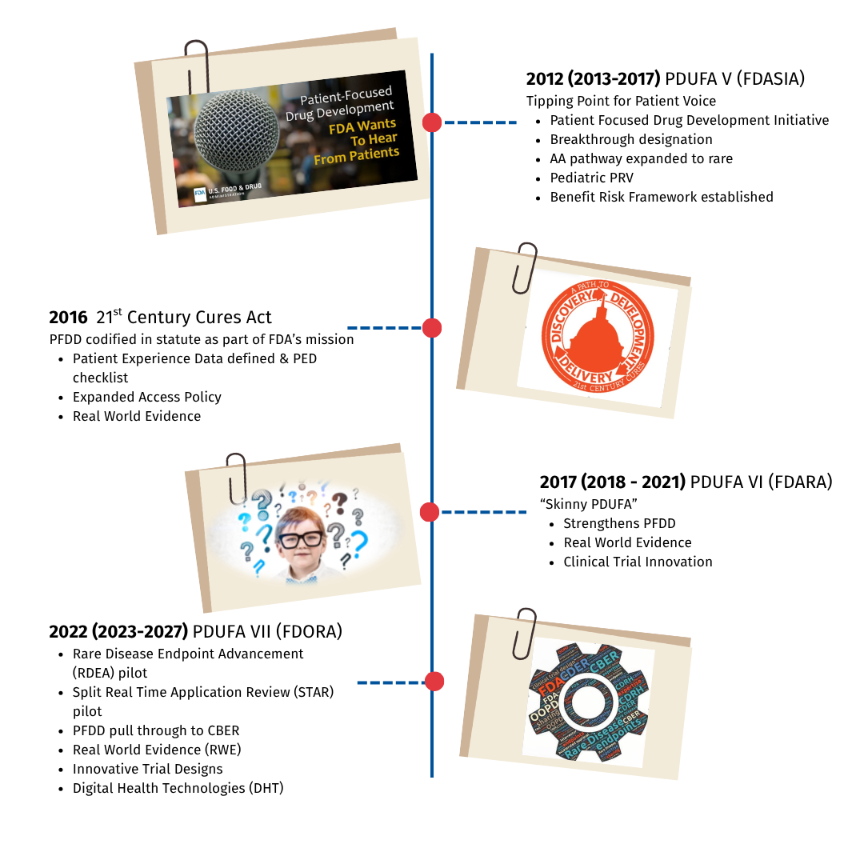
The PDUFA Reauthorization Process
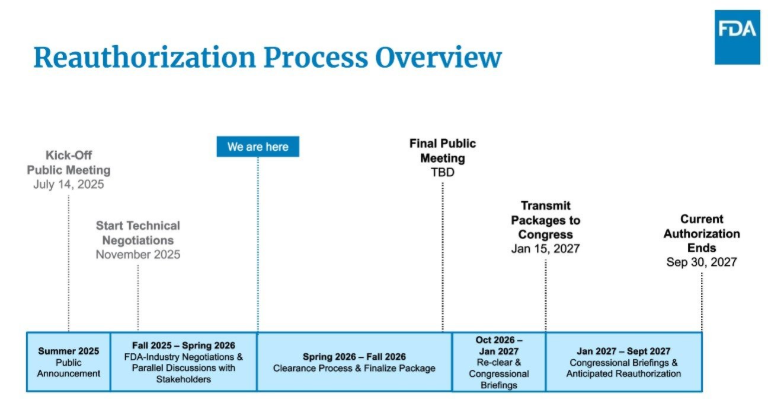
Before Congress gets involved, representatives from the FDA and members of the pharmaceutical industry conduct negotiations to discuss what additional actions and programs the FDA will undertake in exchange for the user fees.
- The process must start with a call for “public input on the reauthorization” and a public meeting with a 30-day comment period — all of which must take place before FDA can begin its negotiations with industry.
- The FDA is also required to hold discussions with representatives of patient and consumer advocacy groups at least once a month while negotiations proceed. The negotiations between the FDA and industry result in a “Goals Letter” or “Commitment Letter” that outlines the performance goals and activities, including pilot programs, that the FDA will undertake in exchange for the fees.
- Congress then votes to approve the “Goals Letter”, usually as part of a larger legislative package, and to set the user fee funding amounts and other fees paid to FDA for the next 5 years.
- Since Congress considers PDUFA reauthorization ‘must pass’ legislation, they typically include several other policies that focus on enhancing how new treatments are developed and reviewed.