The National Economic Burden of Rare Disease Study, a collective effort of the rare disease community sponsored by the RARE Foundation, was published in the Orphanet Journal of Rare Diseases as an open-source document available to the community.
Annie Kennedy, Chief of Policy and Advocacy at RARE Foundation, provides an overview of the National Economic Burden of Rare Disease Study during the Rare Disease Congressional Caucus Briefing on Feb. 25, 2021. Annie provides background on the study, the key data from the study, and what these data mean to the community.
View the full Congressional Caucus Briefing
About the Study
The study is the first of its kind, providing the most comprehensive assessment of the total economic burden of rare diseases (RDs) in a single year. The results help to ensure that the experience of the rare disease community is reflected accurately in policy discussions. This powerful tool can also increase public awareness of the public health crisis of rare diseases.
What is the Cost of Rare Disease?
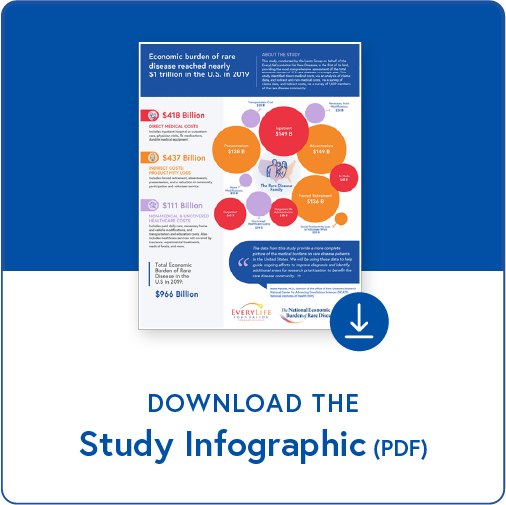
Through this research, we estimated the economic cost of 379 rare diseases reached nearly $1 trillion in the U.S. in 2019. To generate the data for this study, we identified both direct medical costs, via an analysis of claims data, and indirect and non-medical costs, via a survey (The Rare Disease Impact Survey) of 1,399 members of the rare disease community.
The National Economic Burden of Rare Disease Study is a defining moment in a decades-long effort to overcome the challenges of rare diseases. This new economic evidence can guide policy decisions with real and lasting benefits for families and society. We must act on it.
Mark Dant
Chair, Board of Directors, the RARE Foundation (2021)
Father of a son with a rare disease

What Drives Costs of Rare Disease?
The Study Assessed Three Cost Components to Determine Total Economic Burden of Rare Disease

Direct Medical Costs
Examples
- Inpatient or outpatient care
- Physician visits
- Rx medications and their administration
- Durable medical equipment
Private and public insurance programs typically pay providers directly, and patients are responsible for co-pays

Indirect Costs: Productivity Loss
Examples
- Forced retirement
- Absenteeism
- Presenteeism (when employees cannot fully function in the workplace)
- Reduction in community participation and volunteer service
Reduces income for patients and caregivers, while reducing productivity for employers, communities, society

Non-medical & Uncovered Healthcare Costs
Examples
- Necessary home or auto modifications
- Transportation and education costs
- Paid daily care
- Healthcare services not covered by insurance: experimental treatments, medical foods, and more
Out-of-pocket costs are absorbed directly by families living with RD
What We Found
The Economic Burden of Rare Disease Reached Nearly $1 Trillion in the U.S. in 2019
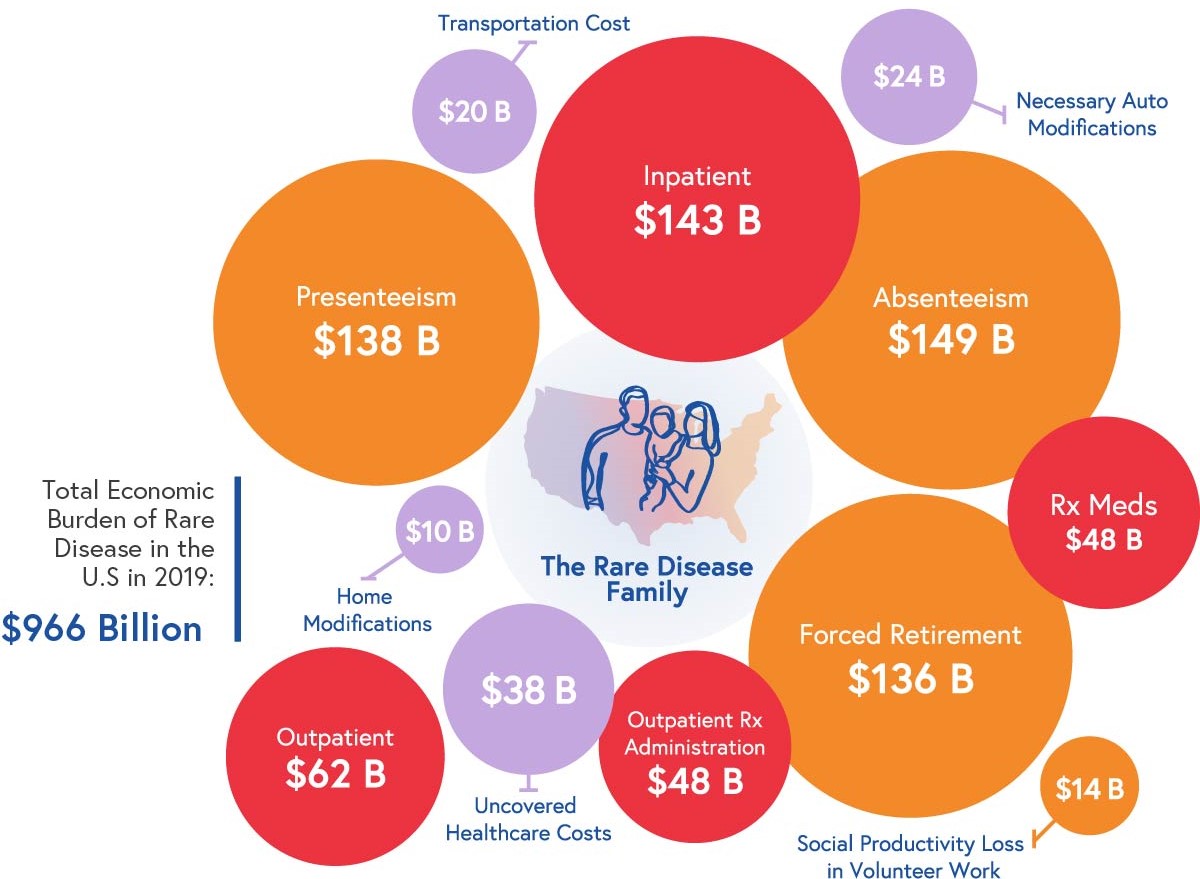
Indirect and Non-Medical Costs Drive Economic Burden of RD, Exceeding Direct Medical Costs
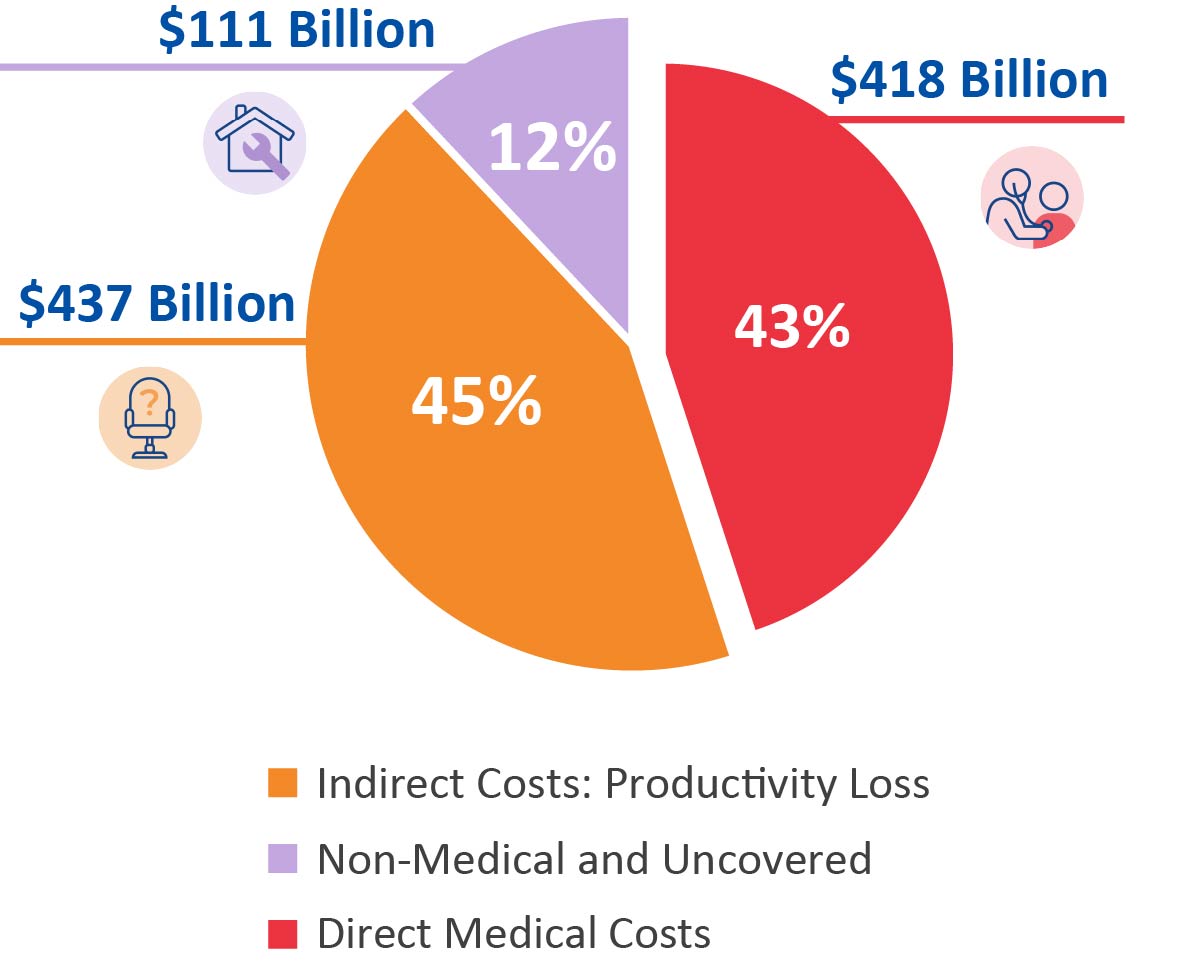
Indirect Costs of Rare Disease: Productivity Loss
$437 Billion
Productivity Loss Revealed a Massive Economic Toll on Patients, Caregivers, Employers
Balancing a career with medical care is tough. You might not be able to complete everything your manager asks. You might not advance in your position quickly, if at all.”
Allison Bones
Mother of a child who died with a rare disease
Non-medical & Uncovered Healthcare Costs
$111 Billion
The Study Also Measured Non-Medical and Uncovered Healthcare –Cost That Includes Things Like Medical Food, Home Modifications, and Transportation.
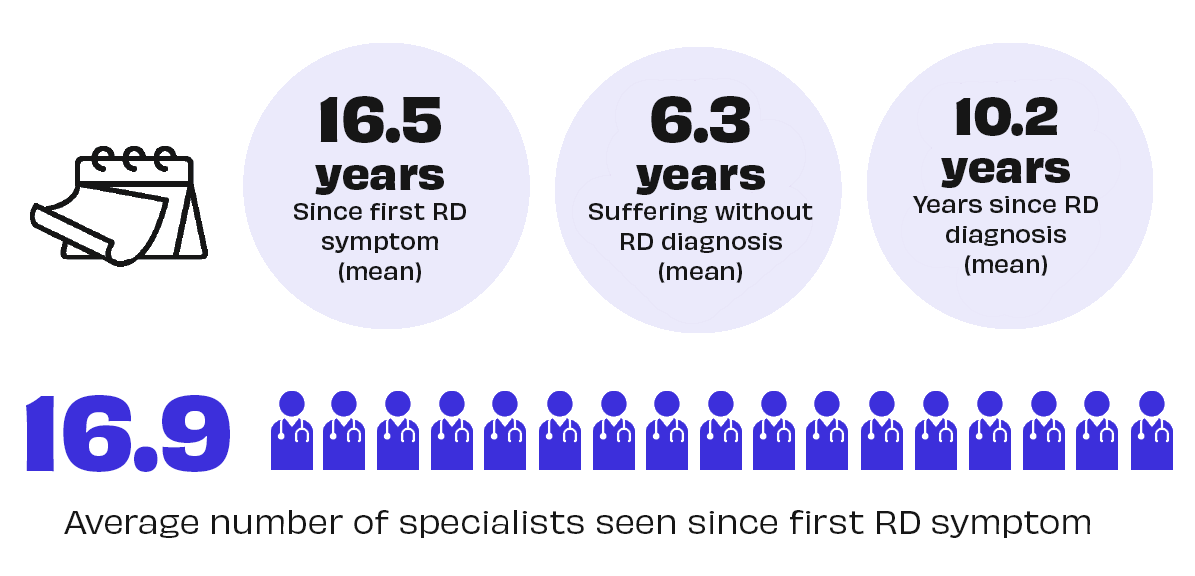
In Addition to Costs, the Research Captured the Long Diagnostic Journey Facing Patients and Families.
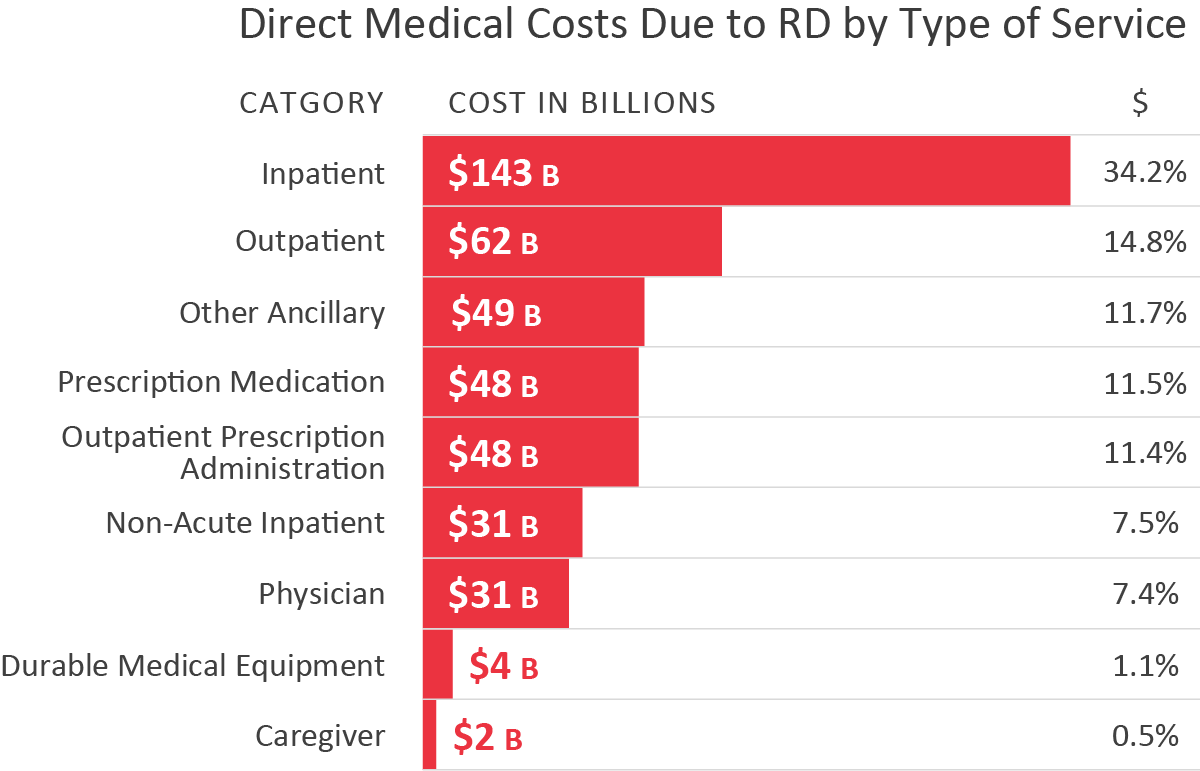
Direct Medical Costs of Rare Disease
$418 Billion
Looking at Direct Costs, Inpatient and Outpatient Care Are Largest Cost Drivers by Category
The financial challenges are overwhelming and unrelenting. The search for a diagnosis or treatment requires navigating a complex medical system and battling with insurance companies all while trying to hold down a job.
Marissa Penrod
Mother of a son with a rare disease
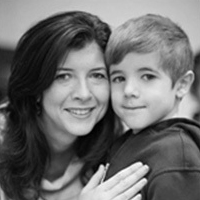
What Can You Do?
These findings demand attention from researchers, policy makers, healthcare providers, employers. There is an urgent need to fund research, enhance awareness, and improve access to diagnosis, care, and treatment of rare disease. Contact your elected representatives, share the Study findings, and urge Congress to support important rare disease appropriations priorities that would advance critical rare disease research and therapy development at the National Institutes of Health, the Centers for Disease Control and Prevention, and the Food and Drug Administration.
Make your voice heard: Engage, share your story, and get involved in advocacy.
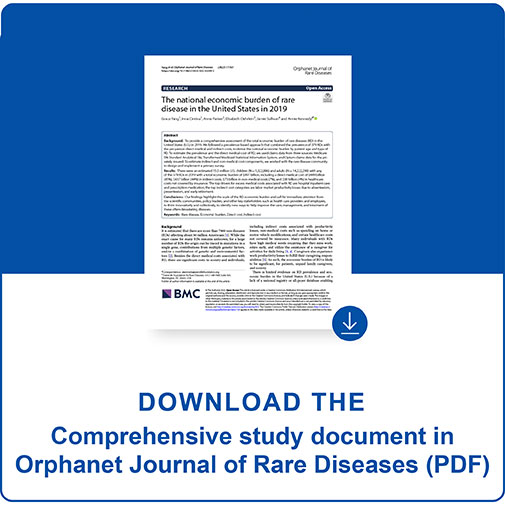
Press Coverage
Study Contributors
Special Thanks to the Rare Disease Community, Study Team, and Study Sponsors
TECHNICAL ADVISORY GROUP
Annie Kennedy
Chief of Policy & Advocacy
RARE Foundation
Anne Pariser, MD
Director, Office of Rare Diseases Research
National Center for Advancing Translational Sciences, NIH
Elisabeth M. Oehrlein, PhD
Senior Director, Research and Programs
National Health Council
Christina Hartman
Senior Director of Advocacy
The Assistance Fund
Kathleen Stratton
National Academies of Science
Engineering and Medicine (NASEM)
Steve Silvestri
Director, Government Affairs
Neurocrine Biosciences Inc.
EXPERT CONTRIBUTORS
Dac-Trung Nguyen
Staff Scientist, Div. of Pre-Clinical Innovation
National Center for Advancing Translational Sciences, NIH
Qian Zhu
Staff Scientist, Div. of Pre-Clinical Innovation
National Center for Advancing Translational Sciences, NIH
Eric Sid
Program Officer, Office of Rare Disease Res.
National Center for Advancing Translational Sciences, NIH
STUDY FUNDING SUPPORT PROVIDED BY
- Alexion Pharmaceuticals
- Amicus Therapeutics
- Argenx US, Inc.
- AVROBIO
- Chiesi Global Rare Diseases
- Enzyvant Therapeutics
- Genentech
- Mallinckrodt Pharmaceuticals
- PhRMA
- Pfizer Inc.
- REGENXBIO Inc.
- Sanofi Genzyme
- Sarepta Therapeutics
- Spark Therapeutics
- Travere Therapeutics
THE LEWIN GROUP PROJECT STAFF
Grace Yang, MPA, MA
Vice President
Inna Cintina, PhD
Senior Consultant
Matt Zhou, BS
Research Consultant
Daniel Emont, MPH
Research Consultant
Janice Lin, BS
Consultant
Samuel Kallman, BA, BS
Research Consultant
THE RARE FOUNDATION PROJECT STAFF
Annie Kennedy, BS
Chief of Policy and Advocacy
Julia Jenkins, BA
Executive Director
Jamie Sullivan, MPH
Director of Policy
RARE DISEASE LEGISLATIVE ADVOCATES ADVISORY GROUP
Allison Bones
President and CEO
T.E.A.M. 4 Travis
Mother of a child lost to a rare disease
Lisa Deck
Board Member
MoyaMoya Foundation
Living with a rare disease
Mackenzie Flynn
Recent Graduate
George Washington University
Living with a rare disease
Andre Marcel Harris
Legislative Intern
Texas House of Representatives
Living with a rare disease
Kathi Luis
Special Projects Director
Amyloidosis Foundation
Patient advocate
Tonya Prince
President
Sickle Cell Assoc. of Houston
Mother of a daughter with a rare disease
Marissa Penrod
Founder
Team Joseph
Mother of a son with a rare disease
Steve Smith
President of Patient Advocacy
WCG Clinical
Father of a son with a rare disease
Sarah Tompkins
Founder
EDS Northwest
Living with a rare disease
Marc Yale
Peer Health Coach
Pemphigus Pemphigoid Foundation
Living with a rare disease
COMMUNICATIONS SUPPORT PROVIDED BY
SmithSolve
Study Citation
Ramani, S., McDannell, B., Sullivan, J., Kennedy, A., Trent, J., & Lewandowski, L. (2026). Medicaid Service Utilization by Beneficiaries with Rare Diseases. Zenodo. https://doi.org/10.5281/zenodo.20819134