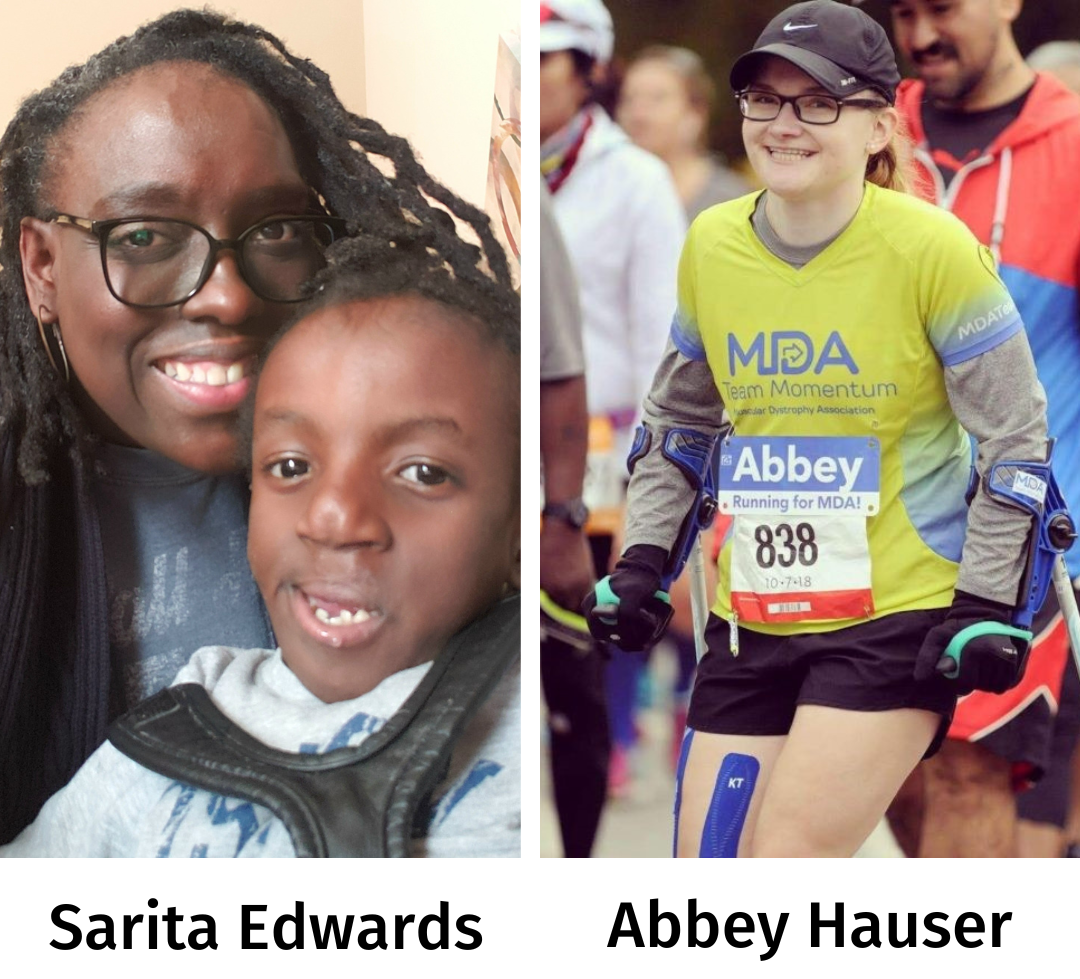
Today, more than 500 advocates are traveling from all 50 states on their way to Washington, D.C. to participate in the first in person Rare Disease Week on Capitol Hill since 2020. Two of these advocates are Sarita Edwards and Abbey Hauser, who are serving as the event’s Advocacy Chair and Vice Chair (respectively). We asked them for their thoughts about the event – what they are most excited about, who they are expecting to see, and more.
Sarita, as a parent advocate and Abbey, as a patient advocate, what are you most excited about for this year’s Rare Disease Week on Capitol Hill?
Sarita: I am most excited about meeting other advocates and hearing their personal stories. We learn so much from each other – about our journeys and the challenges of living with a rare disease. I’m excited to hear these stories in person! I am also very excited to speak with members of Congress at the Capitol. This is my first in-person Rare Disease Week – it’s a new advocacy experience for me!
Abbey: I’ve built so many incredible friendships with other patient advocates over the past few years at virtual rare disease weeks and other EveryLife Foundation and RDLA events, so it’s almost indescribable how excited I am to advocate alongside them in person for the first time.
The main event of Rare Disease Week on Capitol Hill is the meetings between advocates and their Members of Congress. What are you going to discuss and ask of your Members of Congress?
Sarita: My son, Elijah has Edwards Syndrome (Trisomy 18). There is no cure or treatment. I plan to talk to my Members of Congress about strengthening and protecting the Orphan Drug Act also called the ODA – one of the first pieces of rare disease legislation enacted 40 years ago this year because of advocates. Only five percent of rare diseases have an FDA approved treatment. That math doesn’t add up. We need to do more! There’s still work to do.
Abbey: I’ve spent the last few months learning from powerful advocates about the ODA and the ways we can work to strengthen and protect it going forward. I’m looking forward to engaging in these discussions with my Members of Congress, as well as supporting my other Minnesota state advocates as they share about legislation that matters to them.
What is the greatest challenge for advocates this Rare Disease Week?
Sarita: This is the first in-person Rare Disease Week in several years. I think advocates face a few challenges. A lot of rare disease advocates have accessibility needs, I think advocates will have to reacclimate themselves to moving around the Capitol. There are many new Members of Congress. We have to form new relationships and educate them on the issues most pressing to the rare community. There are so many issues competing for congressional attention, but rare disease is a public health crisis that, according to the EveryLife Foundation’s National Economic Burden of Rare Disease Study, cost America $1 trillion dollars in 2019. Rare disease affects every American in one way or another.
Abbey: I agree. A new Congress with a large number of new Members is always a challenge as an advocate, but it is also a great opportunity for our community to forge new connections and while strengthening our previous ones. There are so many issues vying for attention in Congress, but hopefully we can continue to make our voices heard by using the Burden Study to show why Congress needs to prioritize incentivizing and accelerating rare disease treatments and access to treatments.
Who are you expecting to see at Rare Disease Week?
Sarita: For the first time, we’re expecting to see advocates from all 50 states! I’m hoping to see as many of them as possible, each one bringing their own unique style of advocacy! Together we have the potential to influence policy makers and change policies that can save lives.
Abbey: We’re also expecting citizens from the Cherokee Nation to join us. Our rare community is extremely diverse, and having representatives from all over only serves to strengthen our impact. We will also have members of the 2021 and 2022 graduating classes of the Young Adult Rare Representatives – or YARR – Leadership Academy, which for me is going to be a huge highlight of the week to meet my fellow YARR Leadership Academy friends in person. I believe in the power of the young advocate, and we will have diversity in the ages of our advocates present too.
For readers who cannot join Rare Disease Week this year, what can they do this week to show their support for the rare disease community?
Sarita: For those who cannot join Rare Disease Week this year, they can still get involved! They can follow #RareDC2023 to keep up with advocates and what’s happening on Capitol Hill. They can help spread the word by sharing posts and tagging their Members of Congress. They can go to everylifefoundation.org to learn more about rare disease. They can sign up for the EveryLife newsletter to stay up to date about legislation and the rare community.
Abbey: Definitely follow the hashtag #RareDC2023 and share any posts you love with friends and family. You can also post from home using the hashtag about a policy that matters to you or your disease community and tag your Members of Congress.
Sarita Edwards serves as 2023 Rare Disease Week on Capitol Hill Advocacy Chair and is CEO & President at the E.WE Foundation. She began her efforts in advocacy and public policy after her fifth child was diagnosed in utero with Edwards Syndrome or Trisomy 18.
Abbey Hauser serves as 2023 Rare Disease Week on Capitol Hill Advocacy Co-Chair, EveryLife Foundation for Rare Diseases Board Member, Owning My Story blogger, and is rare disease patient living with Classical Ehlers-Danlos Syndrome.