
The EveryLife Foundation for Rare Diseases is proud to announce the release of a new white paper entitled “Pioneering the New Era of Newborn Screening: Collaborative Insights and Recommendations for Modernizing NBS Systems”, a visionary document that charts the future of the newborn screening (NBS) system in the United States.
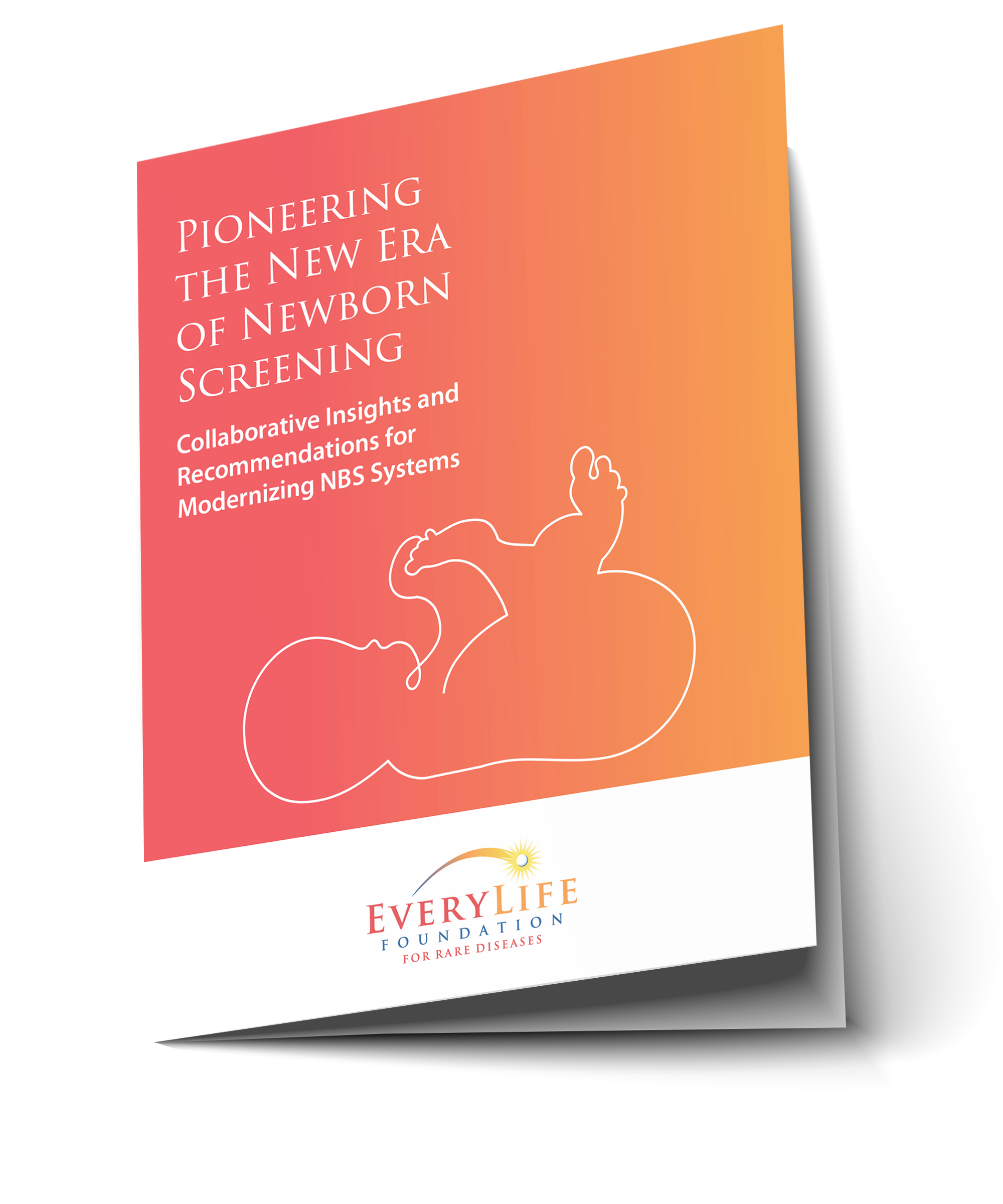 Read the White Paper
Since its inception in the 1960s, the NBS system has expanded from a localized initiative focusing on a single disease to a nationwide screening effort that helps more than 12,000 newborns receive life-altering care. As groundbreaking as this program is, diagnostic and treatment advancements outpace the current capabilities of the system. Given this context, modernization is no longer a choice but a necessity to ensure that every newborn receives early and life-altering interventions for identified treatable conditions.
The NBS system stands as a testament to the nation’s commitment to public health. A 2021 RTI International survey highlighted this sentiment, with 100% of surveyed NBS experts concurring on the necessity for changes, minor or major, to the existing infrastructure.

Acknowledging the pressing need, the EveryLife Foundation facilitated the Newborn Screening Modernization Roundtable Series in 2022. This roundtable series, unprecedented in its scale and ambition, convened over 100 NBS stakeholders. This diverse group, encompassing academic researchers, state public health officials, patient advocacy organizations, industry representatives, and government officials, collaborated intensively to reimagine the future of NBS in the country.
Emerging from these collaborative sessions, the Roundtable identified several policy priorities that would underpin the transformation:
- Federal Infrastructure & Resource Enhancements: The group stressed the need for enhanced federal leadership, coupled with higher accountability and transparency standards for federal newborn screening programs. Proposed solutions include updating the evidence review process and introducing a user fee program to fund these reviews.
- Regional Lab Network: The group highlighted the importance of states inpine establishing a regional lab network to enhance collaboration among state newborn screening programs for faster inclusion of new conditions. Solutions suggest using regional labs for pilot studies or setting best practices for adding conditions.
- Data Accessibility: There was a strong call to enhance access to population-level data before and after newborn screening to simplify the addition of conditions to federal and state panels. Solutions suggest better data sharing to guide states in adding new conditions.
- Incorporating Advanced Neonatal Sequencing: The stakeholders agreed unanimously on the integration of next-generation, evidence-based neonatal sequencing into NBS, aiming for universal implementation across state newborn screening programs. Proposed solutions include updating education and follow-up standards that incorporate genetic testing information.
This initiative stands as a testament to the power of collective action and thought leadership. The policy recommendations emanating from this collaboration not only aim for NBS modernization but ensure its continuation as one of the most triumphant public health programs.
“We invite all stakeholders and interested parties to delve into the white paper’s details,” said Dylan Simon, Director of Policy at EveryLife Foundation for Rare Diseases and primary author of the white paper. “Working together, we can ensure that every newborn in our nation receives the best possible start to life.”
EveryLife Foundation for Rare Diseases gratefully acknowledges the contributions of the planning committee, the American Society of Gene & Cell Therapy (ASGCT), Newborn Screening Translational Research Network (NBSTRN), Baby’s First Test, Every Life Foundation (ELF), Sanofi, Sarepta, BioMarin, Travere Therapeutics, PTC Therapeutics, and Orchard Therapeutics. A list of committee members is available in the paper.
For media inquiries, please contact Margo Metzger.