New Study Projects Future of Approvals, Patients Treated, Costs, and Gaps in Treatment Options
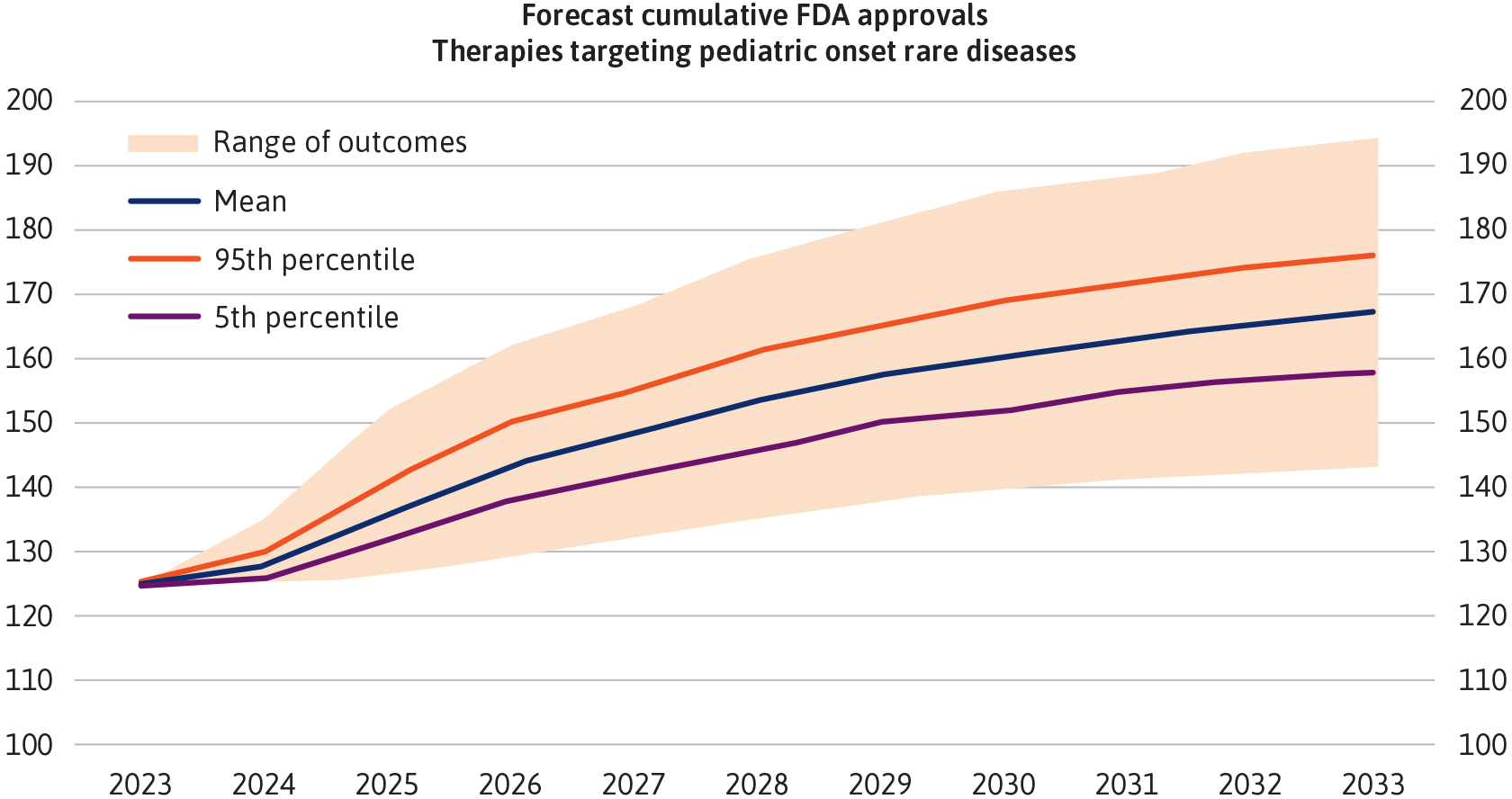
The RARE Foundation and our partners at Tufts Medical Center published new research in the Journal of Managed Care + Specialty Pharmacy (JMCP) that provides insights into the future of treatments for rare diseases that start in childhood. The study’s predictions highlighted the promise of the existing pipeline of potential new treatments, but it also raises serious concerns that progress is not moving fast enough for many. Over 10 years, the study predicted that an average of 45 new products for pediatric rare diseases would be approved, reaching about 24,000 new eligible patients. We also looked at how these new approvals might impact spending. Still, we found that the predicted cost was just 1% of the estimated annual economic impact attributed to rare diseases in the U.S.
Read on to learn more about why we conducted the study, what we did exactly, and what it all means for rare disease policy.
Why did we do this study?
After decades of advocacy and collaboration, our rare disease communities are beginning to see more therapies approved. In some cases, we have communities where multiple treatments across various therapeutic modalities are being developed, from small molecules to gene therapies, but progress is uneven. We also know that treatment approval is not the end game; getting patients access to the treatment requires just as much education, engagement, and persistence on the part of patient advocacy organizations and the patients and families waiting to benefit.
Despite the relatively limited numbers of new rare disease approvals each year, payers and policy makers paint a different picture of progress and its implications for healthcare spending in the U.S. There have been references to the “tsunami” of new therapies and alarming narratives about the healthcare system’s ability to ensure patients can access them, which you will see from this study, is not the case.
Policymakers, payers, sponsors, scientists, and patient advocacy organizations need reliable evidence to assess current policies and guide future actions. Many studies focus on looking back at what has happened (RARE Foundation did one such study recently), but we can also benefit from evidence that looks forward and attempts to predict what might happen in the future. This is where our latest study comes in.
What did we do?
Our study utilized economic modeling. By simulating various scenarios, economic models can predict potential outcomes, test policy impacts, and guide strategic planning. They range from simple equations to complex computer simulations and are widely used in forecasting, policy analysis, and business strategy. Ultimately, economic modeling provides a structured way to analyze data and make informed, evidence-based decisions.
How did we do it?
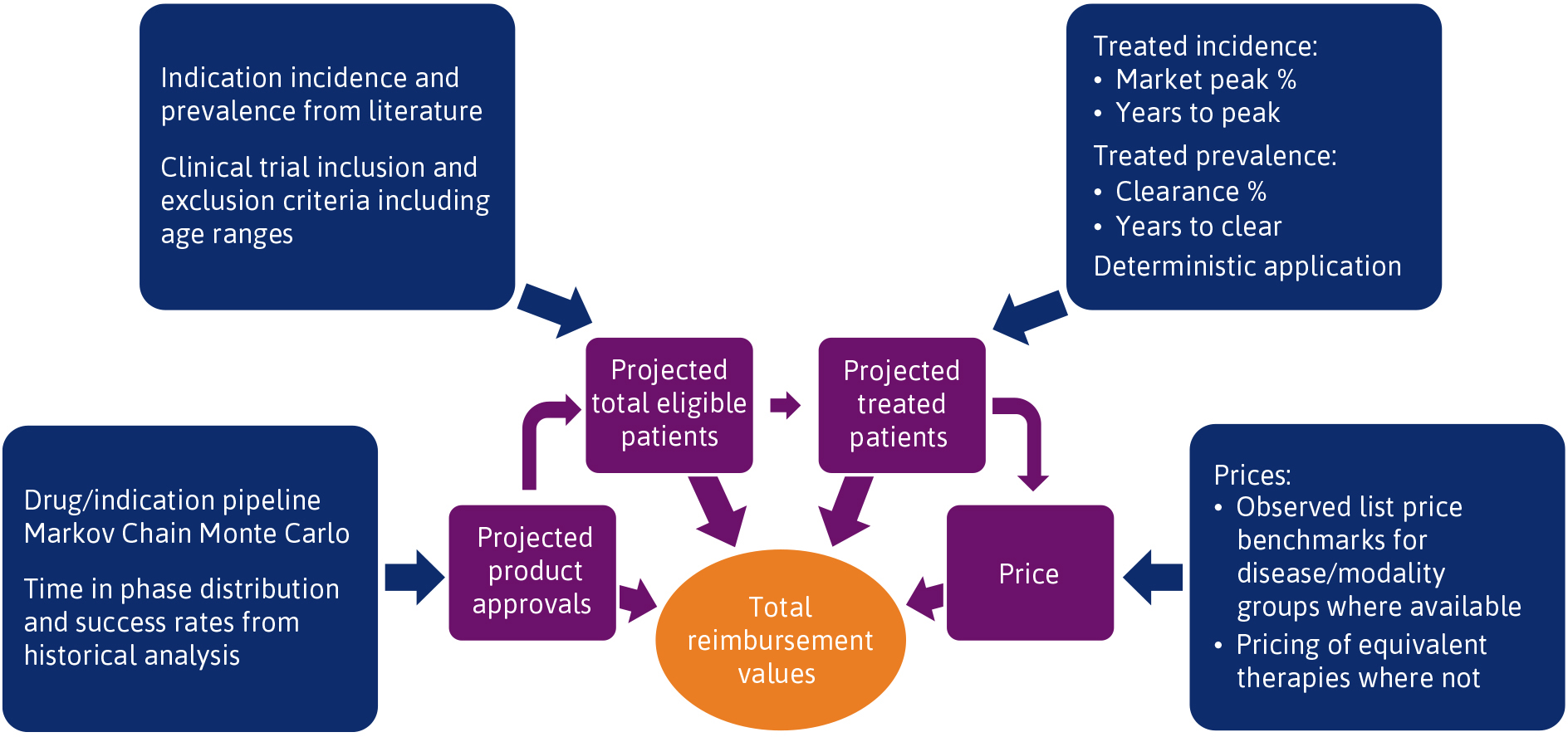
The NEWDIGS FoCUS team at Tufts Medical Center initially created a Pipeline Analysis Model (PAM) to quantify the potential financial impact of the durable cell and gene therapy pipeline. In this case, ‘pipeline’ refers to the clinical research underway to determine if a potential treatment is safe and effective. In the PAM model, all phases of clinical research were included.
While the PAM predictions about the cell and gene therapy pipeline were helpful, rare disease therapies involve many other types, such as small molecules, mRNA, and monoclonal antibodies. In 2024, in partnership with the NEWDIGS FoCUS team, we built on the initial PAM to model, or predict, the number of new therapies for rare pediatric-onset conditions and their associated costs between 2024 and 2033.
To do this, we looked at the likelihood of approval for therapies in all stages of development across various modalities, characteristics about the target patient population, the possibility of adoption (if patients will use the treatment), and the associated costs for that therapy or similar therapies if that drug was not yet available. The data collected was assembled and run through a complex simulation that repeats one million iterations to create an accurate forecast. To help supplement the information used to inform the model, we brought together rare disease patient advocacy organizations and other experts to speak about the patient population, factors that are likely to affect how many and how quickly patients use a treatment, and other areas that couldn’t be determined in published literature.
What did we find?
What is in the Pipeline Now?
3,230 total clinical studies were included in the model, consisting of 19 therapy classes, 106 gene therapies, 178 small molecules, 49 monoclonal antibodies, 27 antisense/mRNA, 77 recombinant proteins, 17 peptides, and 30 other therapies
How many new products will be available through 2033?
The model predicted an average of 45 new treatment approvals for non-oncology pediatric-onset rare diseases. That means we would add about 50% more therapies than exist today for these conditions, making an additional 26,000 patients eligible to be treated.
How would spending be affected by new therapies?
Based on the predicted 45 new treatments, the model projects a mean product revenue increase of $10.5 billion in 2033. Product revenue isn’t a perfect estimation of actual expenses due to the complex way treatments are paid in the U.S., but it gives us an idea of how spending may trend over time.
What does this data mean?
A model prediction is never intended to be interpreted as what will occur with 100% certainty. There are always caveats to consider.
- The model used information from what has occurred in the past, such as the percentage of Phase 1 clinical trials that result in product approvals, to predict what is likely to happen. As science and technology advance, the rates of progress could change.
- The model had to make assumptions about human decisions, such as whether physicians will prescribe the new therapy, whether patients will take it, or whether, if there is another therapy option, the new therapy will be added or replaced by the older one.
- Predicted revenue increases do not account for the costs that will be avoided as a result of the new therapies. The results should be considered in context, understanding that they may prevent disease from developing, result in fewer hospital admissions, delay the need for home and community-based services, and avoid many other economic impacts.
NOTE: We must also acknowledge that the analysis used 2023 data and does not account for dynamic policy developments that affect investment in and success of rare disease pipelines, including policy changes like the lack of reauthorization of the Rare Pediatric Disease Priority Review Voucher Program, and changes to the biomedical research ecosystem during the first 100 days of the Trump Administration. Additional modeling will be required to consider recent ecosystem impacts and to broaden the model to include adult-onset rare diseases.
How can you use this information?
Key Messages for Policymakers and Payers
- While adding 45 new therapies to the rare disease space is a landmark feat, the reality is that the number of newly identified rare diseases is likely to outpace the rate of novel therapy development, and 95% of rare conditions will still be without an approved therapy by 2033.
- There is great promise in the pipeline, but predicted approvals and costs fall short of the messages we often hear from policymakers and payers considering incentive and coverage policy.
- The data should be viewed in the context of the current economic impact of rare diseases, estimated to be nearly $1 trillion annually, of which less than 10% was associated with prescription drugs and related administration costs. The predicted $40 billion in cumulative total spending on all pediatric-onset rare disease treatments in 2033 does not threaten the financial sustainability of the $4.7 trillion healthcare system.
- The data also shows that we must commit the resources needed to accelerate scientific progress for all. Still, examining the current pipeline highlighted the types of diseases where more progress is being made. We must also identify actions to ensure that progress is experienced by communities being left behind.
- The model showed that some transformational therapies can be associated with short-term spending spikes in the first few years after approval, resulting from the current treatable populations accessing the treatment. This reinforces the need for policymakers to solve policy barriers that prevent the adoption of innovative payment arrangements, which could facilitate access to new therapies at the earliest possible moment in a way that the healthcare system can sustain.
Study Contributors
We are grateful to our partners at NEWDIGS for their partnership and commitment to producing evidence to guide rare disease policy. We also appreciate the ongoing counsel received from Community Congress Member Organizations, who received regular updates on the research, and from all the representatives from patient advocacy organizations who provided epidemiological information about their population and participated in live discussions with the research team. Lastly, we are grateful to our funding partners who supported the RARE Foundation’s 2024 policy research initiatives, enabling this and other research to occur.
Policy Research Funding Support Provided By:
Amgen
Amicus Therapeutics
BioMarin Pharmaceutical Inc.
Merck & Co., Inc.
Novartis
PhRMA
Stoke Therapeutics
Takeda Pharmaceutical
Patient Advocacy Group Focus Group & Interview Participants:
- Ryan Fischer, Foundation for Angelman Syndrome Therapeutics (FAST)
- Swapna Kakani, Alabama Rare
- Melissa Kennedy, International Rett Syndrome Foundation
- Sharon King, Taylor’s Tale
- Kellyn Madden, Fredrich’s Ataxia Research Alliance (FARA)
- Kelly Maynard, Little Hercules Foundation
- Jessica Nickrand, PhD, Child Neurology Foundation
- Patricia Wood, NBIA Disorders Association