What is Patient-Focused Drug Development?
Patient-Focused Drug Development (PFDD) is an approach to therapy development that centers patient experiences, perspectives, needs, and priorities.
Why is PFDD important?
PFDD ensures that patient and caregiver perspectives, experiences, and priorities are integrated early and often during medical product development. This is critical in rare diseases, where traditional clinical expertise and published data may be limited.
Patient perspectives have led to the identification of outcomes and endpoints in clinical trials that reflect patient definitions of meaningful change, not just clinical or regulatory assumptions. PFDD guides sponsors to develop patient-centered trials and provides therapy reviewers with insight to align regulatory decisions with patient needs and risk tolerance. This increases the likelihood that new therapies will address unmet needs, be acceptable to patients, and succeed in clinical trials. By ensuring meaningful outcomes are measured and fostering transparent, collaborative relationships between patient advocacy organizations, sponsors, and regulators, PFDD enables more effective and efficient development of therapies for rare disease.
The History of PFDD
PDUFA V and FDA Safety and Innovation Act
The Patient-Focused Drug Development (PFDD) initiative was created in 2012, with the fifth reauthorization of the Prescription Drug User Fee Act (PDUFA V). The initiative provided for 20 public meetings to showcase patient perspectives on significant symptoms impacting daily life and approaches to treatment outside product approvals for specific disease states. The program was expanded to enable patient advocacy organizations to host meetings in collaboration with the FDA, with over 100 meetings taking place since. The same year, the passage of the FDA Safety and Innovation Act (FDASIA) led to the development of a new FDA benefit-risk assessment framework to consider treatment burdens and needs from a patient perspective.
21st Century Cures Act
In late 2016, the 21st Century Cures Act codified PFDD as part of the FDA’s mission, creating a new category of “patient experience data” (PED) and providing clarity as to how it is used by FDA review staff.
PDUFA VI
With the passing of PDUFA VI in 2018, the FDA committed to issuing a series of four methodological guidances on PFDD, including the use of PED in medical product development and regulatory decision-making, as well as a glossary of terms for PFDD.
PDUFA VII
In 2022, PDUFA VII extended the agency’s commitment to PFDD with a focus on staff training for the collection and application of patient preference information (PPI)
PFDD in Practice
CDER Methodological Regulatory Guidances
Since 2018, CDER has worked to issue the guidance documents for conducting PFDD as part of its commitments under the PDUFA VI Reauthorization (2017) and the 21st Century Cures Act. These guidances provide industry, academic researchers, and patient organizations with expected practices for:
- Guidance 1: sampling methods to collect comprehensive and representative input (Final);
- Guidance 2: quantitative and qualitative research methods to identify what is important to patients (Final);
- Guidance 3: selecting high-quality, patient-centered measures for clinical outcome assessments (COAs) in drug development programs (Final); and
- Guidance 4: incorporating COA data into endpoints for regulatory decision-making (Draft).
Benefit-Risk Framework
Using the modernized Benefit-Risk Integrated Framework, PFDD meetings support drug reviewers to understand patients’ unmet needs, therapy benefits that matter most, and risk tolerance. This knowledge is important for developing patient-centered outcome measures used in regulatory decision-making.
Clinical Outcomes Assessments (COA)
A COA refers to the assessment of a performance or clinical outcome reported by a clinician, patient, or non-clinician observer. To supplement the PFDD Guidance Series, the FDA issued the guidance, Submitting Clinical Trial Datasets and Documentation for Clinical Outcome Assessments Using Item Response Theory. These specifications provide guidelines for standardizing datasets to facilitate FDA review of the COA submitted in a market application. COA measures should be discussed with FDA as early as possible in medical product development.
Externally- led Patient-Focused Drug Development Meetings
In 2015, the FDA announced the opportunity for Externally-led PFDD (EL-PFDD), meetings led by patient organizations with input from FDA staff, to expand the benefit of the PFDD initiative. This is an opportunity for FDA staff to listen and take patient input back to their work.
These meetings provide opportunities to identify areas of unmet need, outcomes that matter to patients that can inform future research efforts, and to build new relationships between the patient community, medical product developers, and the FDA.
The PFDD Guidance Compendium Workshop Series
To inform the understanding of how PFDD and related guidances can be applied to therapeutic development for rare diseases, the RARE Foundation (formerly known as The EveryLife Foundation for Rare Diseases) joined with the National Health Council, Biotechnology Innovation Organization (BIO), and Pharmaceutical Research and Manufacturers of America (PhRMA) to convene a collaborative effort to assess the existing patient-focused medical product development guidances through the lens of rare disease medical product development.
A series of four virtual workshops were conducted between June and October 2021 to consider the application of these guidances across four lifecycle stages of medical product development:
- research & development (R&D) and early clinical development;
- clinical development;
- health authority review and marketing authorization; and
- post-marketing
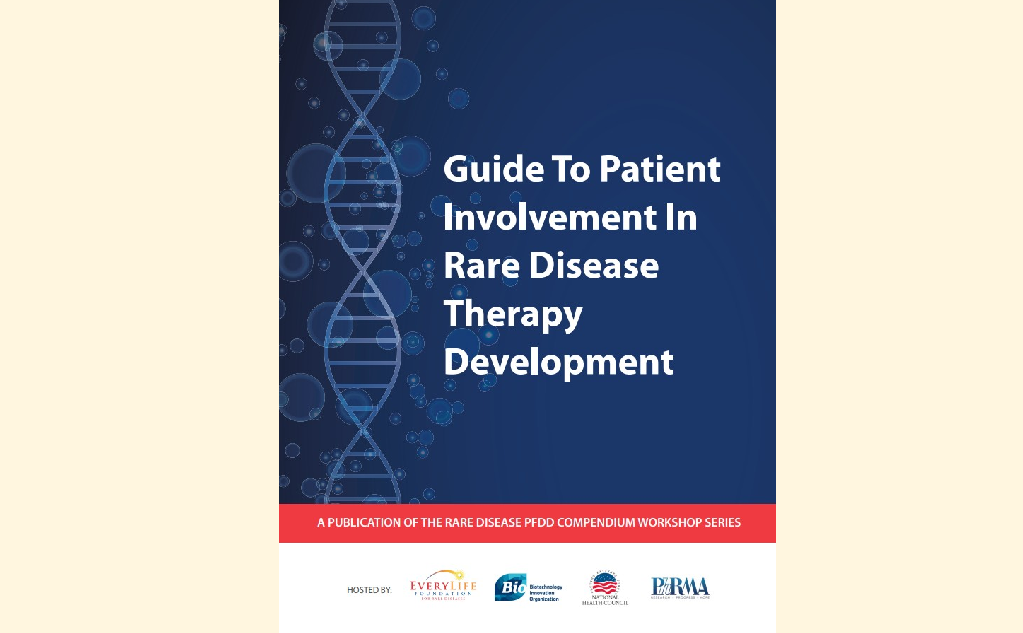
The summaries of these Roundtables informed the creation of the “Guide to Patient Involvement in Rare Disease Therapy Development”.
Guide to Patient Involvement in Rare Disease Therapy Development
Released in 2022 in collaboration with BIO, National Health Council, PhRMA, and an expert steering committee, the RARE Foundation created this resource for all stakeholders to utilize as we work to optimize rare disease product development efforts. It connects patient-focused medical product development policy to the challenges and opportunities present across all stages of the development and delivery of a therapeutic for a rare disease.
PFDD Today
The PFDD initiative has evolved into a broader evidence-gathering framework to collect patient experience data throughout the medical product development and regulatory review process. Policy forums, public hearings, and other ongoing engagement opportunities enable continued dialogue between patients, caregivers, advocacy organizations, researchers, industries, and regulators. The FDA is increasingly focused on developing methodologies and guidance documents that help ensure patient experience data is collected rigorously and used effectively in regulatory decision-making.